Moon's Secret? Lost Planet Discovery Shocks!
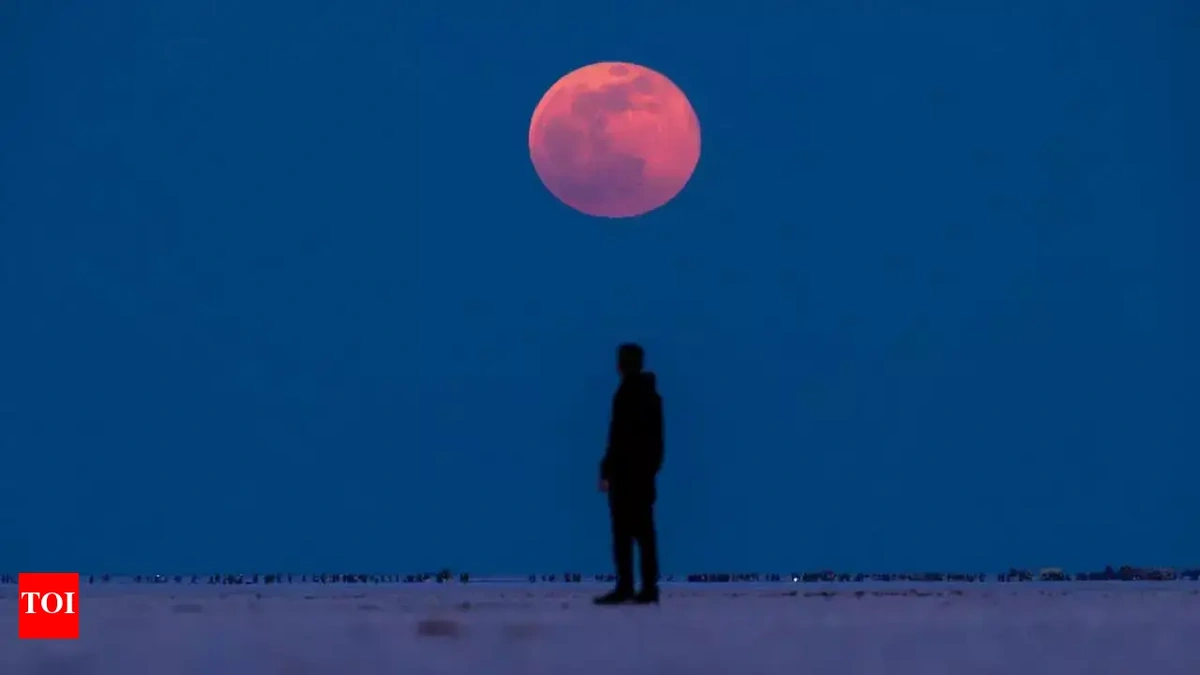
Okay, folks, buckle up because we’re diving into something absolutely mind-blowing today: the possible discovery of a missing planet and its insane connection to the Moon’s formation. Yes, you read that right. Forget your daily dose of cat videos for a minute – this is about rewriting the cosmic history books. What fascinates me is not just the potential discovery itself, but the sheer audacity of the idea that a long-lost planetary sibling could be responsible for the very existence of that glowing orb in our night sky. Let’s unravel this mystery together, shall we?
The “Why” | Unveiling a Cosmic Conspiracy
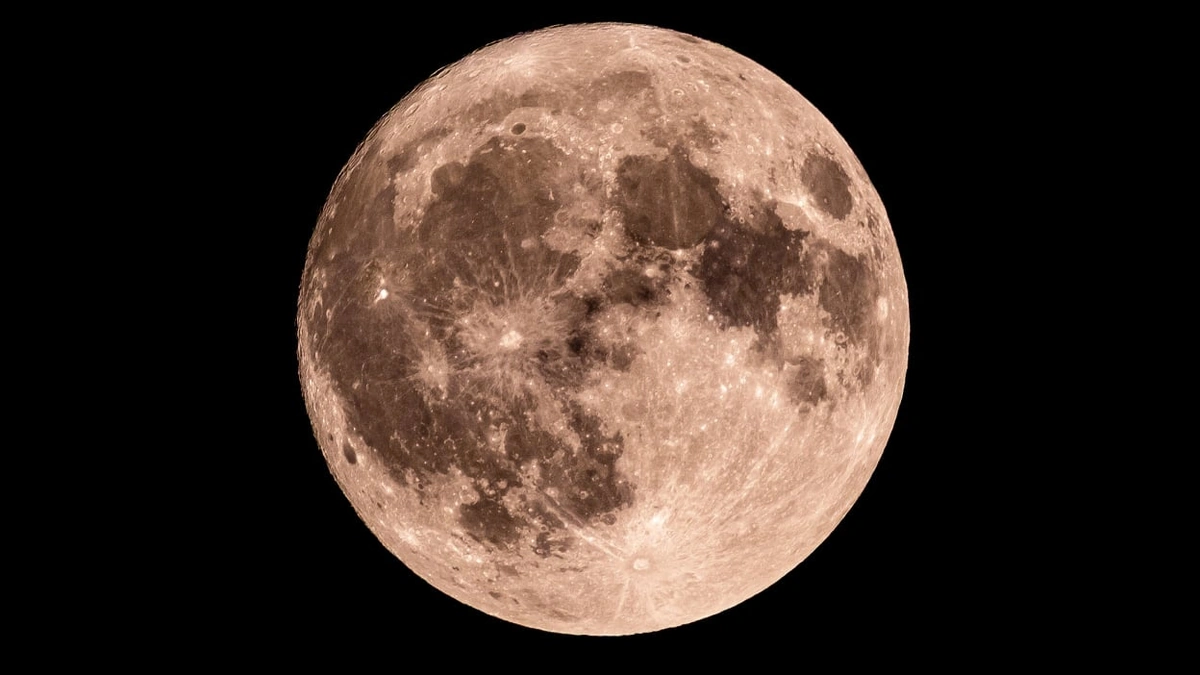
So, why does this matter? Here’s the thing: understanding the Moon’s origin is fundamental to understanding the early solar system. For decades, the prevailing theory has been the “Giant-impact hypothesis.” This suggests that a Mars-sized object, often called Theia, collided with the early Earth, and the debris from this collision coalesced to form the Moon. But, there have always been niggling issues. For example, the Moon’s composition is suspiciously similar to Earth’s – too similar, some scientists argue, for it to have formed from a completely different body. This is where the missing planet – let’s call it Planet V for now – comes in.
The idea is that Planet V could have destabilized Theia’s orbit, leading to the collision with Earth. Or, perhaps even more dramatically, Planet V was involved in the collision itself, contributing material to both Earth and the Moon. Think of it as a cosmic billiards game, with planets smashing into each other and creating new worlds in the process. This new hypothesis is a compelling alternative theory. It is something researchers have been digging into.
The Moon’s Compositional Conundrum | Planet V as the Missing Link
One of the biggest puzzles in lunar science is the Moon’s isotopic similarity to Earth. If the Giant-impact hypothesis is correct, the Moon should have a different isotopic composition, reflecting a mixture of Earth and Theia. But it doesn’t. It’s almost as if the Moon is a chunk of Earth that was somehow blasted into space. The inclusion of Planet V could solve this. If V had a similar composition to Earth, its involvement in the impact could explain the Moon’s Earth-like isotopes. It would, essentially, act as a missing link in our understanding of the Moon’s formation. It is something to think about.
But, let’s be honest, this is all highly speculative. We’re talking about events that happened billions of years ago, based on indirect evidence and sophisticated computer simulations. According to research published in Nature Geoscience, the presence of such a planet could also explain certain anomalies in the distribution of isotopes in meteorites found on Earth. It is a really cool hypothesis . The scientists involved in these studies caution that it is still very early days, and more evidence is needed before Planet V can be officially declared a member of our solar system’s past.
Searching for Planet V | Where Do We Look?
So, how do we find evidence of a planet that supposedly vanished billions of years ago? Well, we can’t exactly point a telescope and see it, can we? Instead, scientists are looking for subtle clues in the solar system’s architecture – in the orbits of existing planets, in the composition of asteroids, and, of course, in the Moon itself. One promising avenue of research involves analyzing the lunar mantle for traces of elements that are rare on Earth but might have been abundant on Planet V. The lunar mantle is a primary focus now.
Another approach is to run more sophisticated computer simulations of the early solar system, incorporating the possibility of a fifth planet and seeing how well the simulations match the current configuration of the solar system. It’s like trying to piece together a prehistoric crime scene using only a few scattered clues. The challenge is immense, but the potential payoff – a complete understanding of our cosmic origins – is even greater.
The Emotional Angle | Our Place in the Cosmos
Here’s where I get a little philosophical. Think about it: the Moon has been a constant companion to humanity since the dawn of time. It has inspired myths, guided explorers, and stirred our imaginations. The idea that its very existence might be tied to a long-lost planet, a cosmic sibling that met a cataclysmic end, adds a layer of poignancy to our relationship with it. The moon’s orbit is a tricky thing. It reminds us that we are not alone in the universe, that our solar system is a dynamic and ever-changing place, and that even the most familiar objects in our sky have a hidden history waiting to be uncovered.
It’s a little bit like discovering that your family has a secret relative you never knew about – someone who played a pivotal role in shaping your family’s history. It changes your perspective, makes you question what you thought you knew, and opens up new avenues of exploration and discovery. The moon is our constant reminder.
Giant Impact Hypothesis | Is it Time for a Revision?
The Giant Impact Hypothesis has been the dominant theory explaining the Moon’s formation for decades. However, the evidence supporting Planet V is mounting and the prevailing scientific community recognizes the importance of continued research. This isn’t about disproving the old theory; it’s about refining it, adding more nuance and complexity to our understanding of the moon’s formation . What I’m seeing is a call for re-examination. The idea of lunar formation can change everything.
And that, my friends, is what science is all about. It’s not about clinging to old dogmas, but about constantly questioning, exploring, and revising our understanding of the world – or, in this case, the cosmos. The existence of Planet V is not a certainty, but a possibility. And even if it turns out to be a dead end, the search for it will undoubtedly lead to new insights and discoveries about our solar system.
FAQ About the Missing Planet and the Moon
Could this discovery impact future space missions?
Absolutely! Understanding the Moon’s composition and origin is crucial for planning future lunar missions, especially those aimed at extracting resources or establishing a permanent lunar base. This new information could help us identify the best locations for resource extraction and provide insights into the Moon’s geological history.
What if Planet V never existed?
Even if Planet V turns out to be a false lead, the research it has spurred will be invaluable. The simulations and analyses conducted in the search for Planet V will undoubtedly shed light on other aspects of the early solar system, such as the formation of the terrestrial planets and the distribution of asteroids.
Why has Planet V remained undetected for so long?
Because it likely no longer exists! The theory suggests it collided with Earth or was ejected from the solar system billions of years ago. Finding direct evidence of such an ancient event is incredibly challenging, requiring a combination of advanced simulations, subtle clues in the solar system’s architecture, and a healthy dose of scientific intuition.
What’s the next step in this research?
More simulations! Scientists are constantly refining their models of the early solar system, incorporating new data and exploring different scenarios. Future space missions, particularly those focused on analyzing the Moon’s mantle, could provide crucial evidence to either support or refute the Planet V hypothesis.
So, there you have it. The possible discovery of a missing planet linked to the moon ‘s formation. It’s a story that is still unfolding, a cosmic mystery that may take years, or even decades, to solve. But one thing is for sure: it’s a story that reminds us of the infinite wonders of the universe and the boundless curiosity that drives us to explore it. As the great Carl Sagan once said, “The cosmos is within us. We are made of star-stuff. We are a way for the universe to know itself.” And who knows, maybe we’re also a way for the universe to remember its missing siblings. Explore More!
About the Author